

Tel :+86 - 17718123415
Email:info@sailsolaress.com

When designing battery energy storage systems for backup and microgrid use, transfer switches are often the unsung hero of system reliability. Choosing the wrong switching hardware can lead to unexpected blackouts, equipment damage, or failure to meet site backup requirements.
Three main switch types dominate ESS installations: manual transfer switches, automatic transfer switches (ATS), and static transfer switches (STS). Each differs drastically in switching speed, cost and suitable load types.
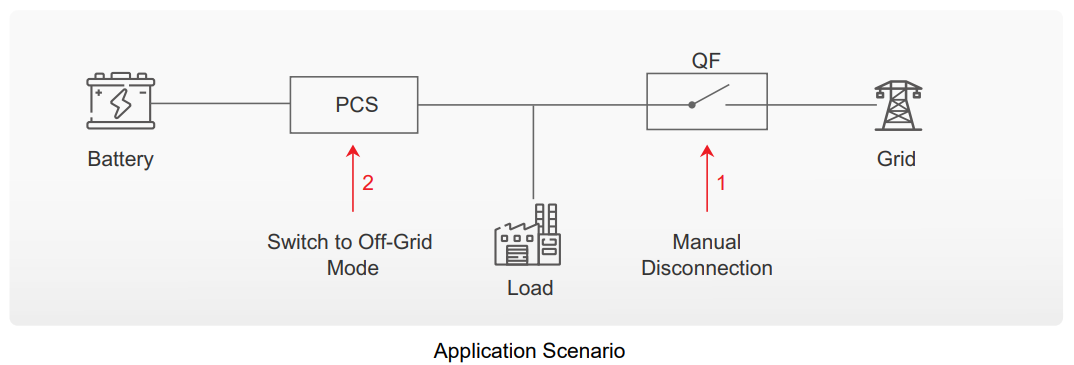
A manual transfer switch relies entirely for human operation. When the utility grid fails, technicians must physically operate the switch to isolate the ESS from mains power, before the PCS can enter off-grid island mode to supply critical loads.
Once grid power is restored, site personnel need to manually reconnect the grid side to return to grid tied operation.
Pros & Cons
Best fit: Small, non-critical sites with limited project budget, where short-duration outages are acceptable.
ATS is an electrical mechanical automatic change-over switch. Without human intervention, it can switch load supply between utility grid, diesel generators or battery ESS.
When mains power drops, ATS detects grid fault and switches loads over to backup power source. Typical switching time ranges from several to tens of seconds, creating a short power interruption for downstream loads.
After grid recovery, ATS automatically switches loads back to utility supply.
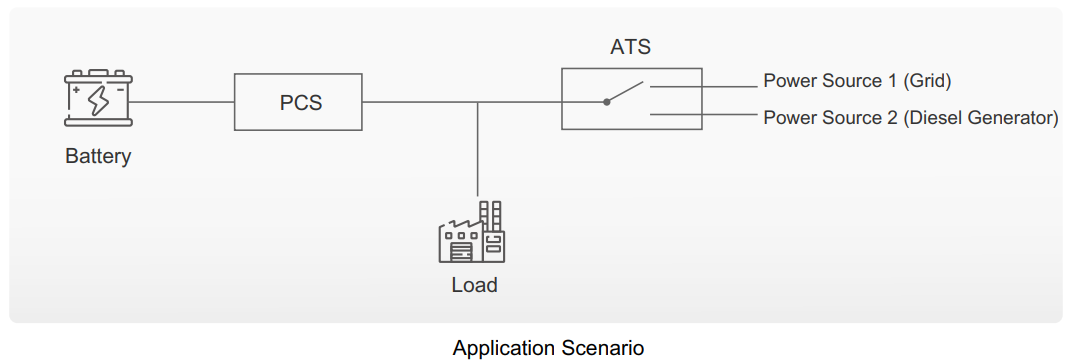
Pros & Cons
Best fit: Hybrid backup projects combining ESS and diesel generators, sites that can tolerate brief power loss.
STS uses solid state semiconductor components with zero moving mechanical parts. It can complete grid isolation and power path switching within milliseconds, achieving near seamless power transfer for end loads.
During normal operation, loads are supplied jointly by grid and energy storage. Once grid voltage or frequency exceeds protection thresholds, STS instantly cuts off the faulty utility connection.
The ESS and PV continue powering local loads without perceptible power drop. When grid quality recovers, STS re-synchronizes and reconnects to mains.
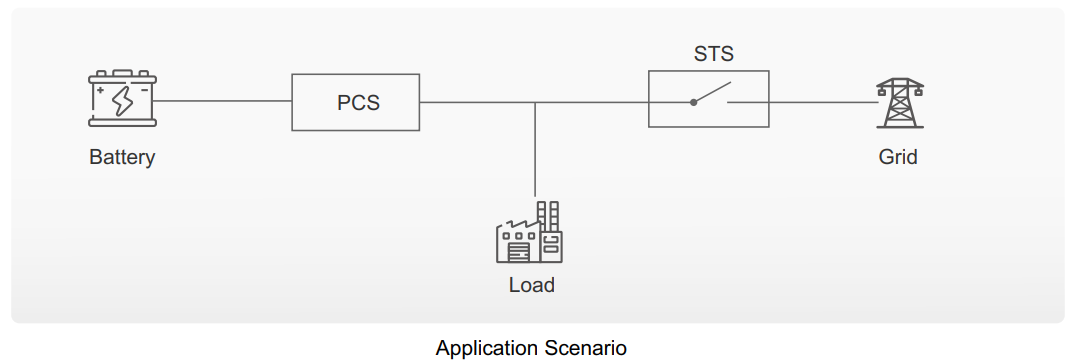
Pros & Cons
Best fit: Mission-critical loads that cannot tolerate any power cut.
4. Comparison
| Device | Switching Principle | Transfer Time | Load Power Interruption | Typical Case |
| Manual Transfer Switch | Human mechanical operation | Minutes | Long Outage | Low-budget small sites |
| ATS | Electro mechanical motor-driven | Several ~ tens seconds | Short blackout allowed | ESS + diesel hybrid backup |
| STS | Solid-state static semiconductor | Millisecond | Near-zero cut | Critical load, seamless islanding |
There is no one‑size‑fits‑all transfer switch for energy storage. Your decision should be guided by how much power interruption your loads can accept, system power rating and total project budget.
Most general‑purpose backup sites select ATS, while STS is reserved for high‑value critical‑load applications.
5. Sail Solar Solution
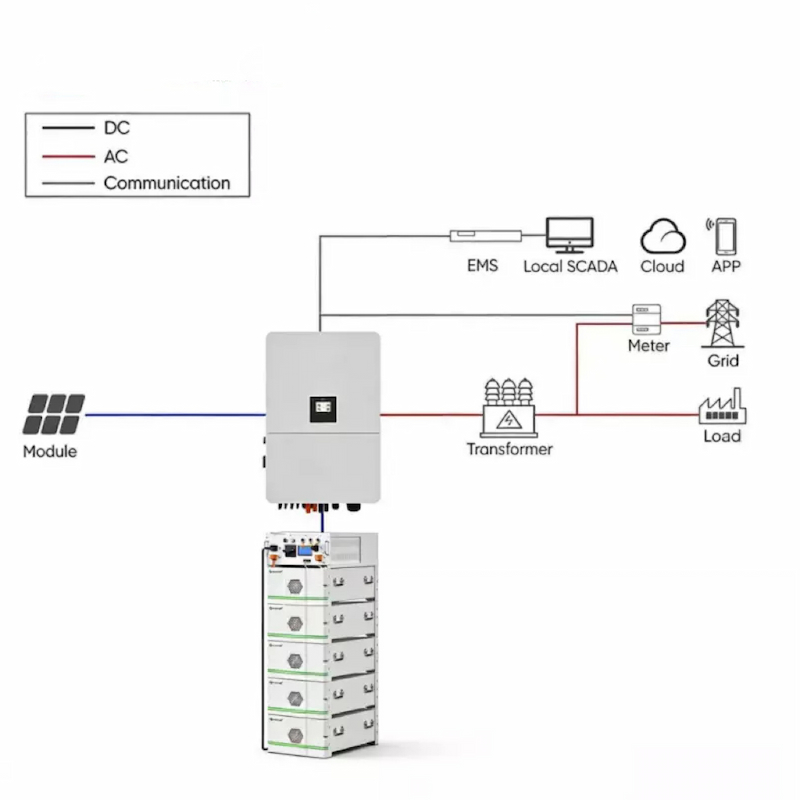
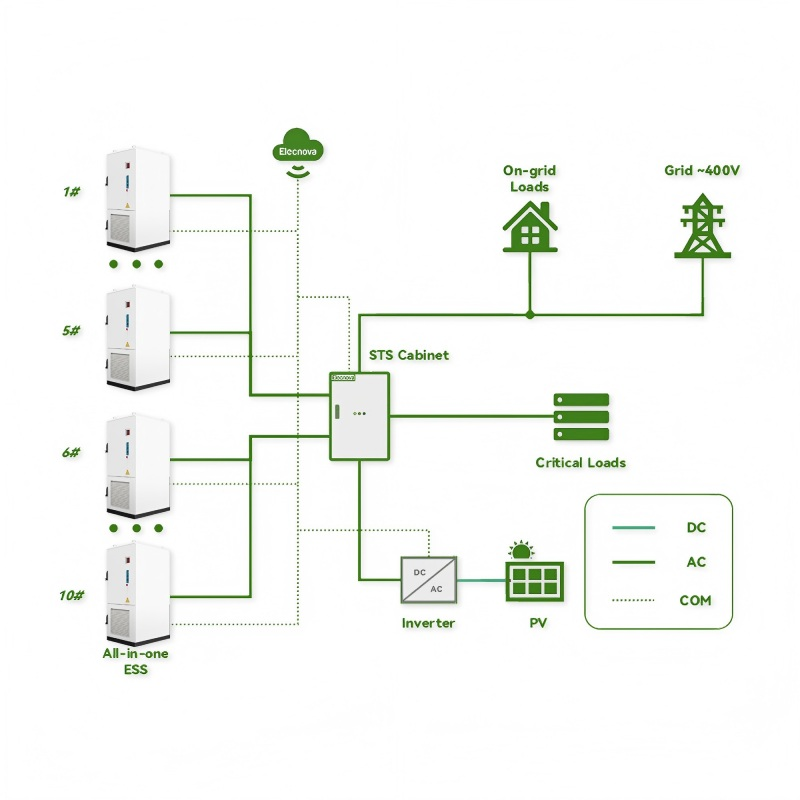
Sail Solar has different solutions about such hybrid solar energy storage projects: with integrated STS module and external STS module, Interlocking and coordinated operation with the PCS are achieved via hardwired dry contact signals and CAN/RS485 communication.
Two configuration options are available:
Small-to-Medium Power Energy Storage Systems (30–500 kW)
These systems incorporate hybrid inverters equipped with STS functionality; A hard-wired dry contact interlock ensures a grid-tied to off-grid switching time of ≤10 ms, enabling seamless power supply; the STS can be independently maintained without shutting down the entire PV system.
Conclusion
In practical ESS applications, ATS and STS can be flexibly combined based on specific project needs, offering enhanced power reliability and system flexibility. Clients need to reasonably select transfer equipment according to actual load sensitivity, power continuity requirements, system power rating and project budget.
 IPv6 network supported
Leave A Message
Scan to Wechat :

Scan to WhatsApp :